Body-fluid identification
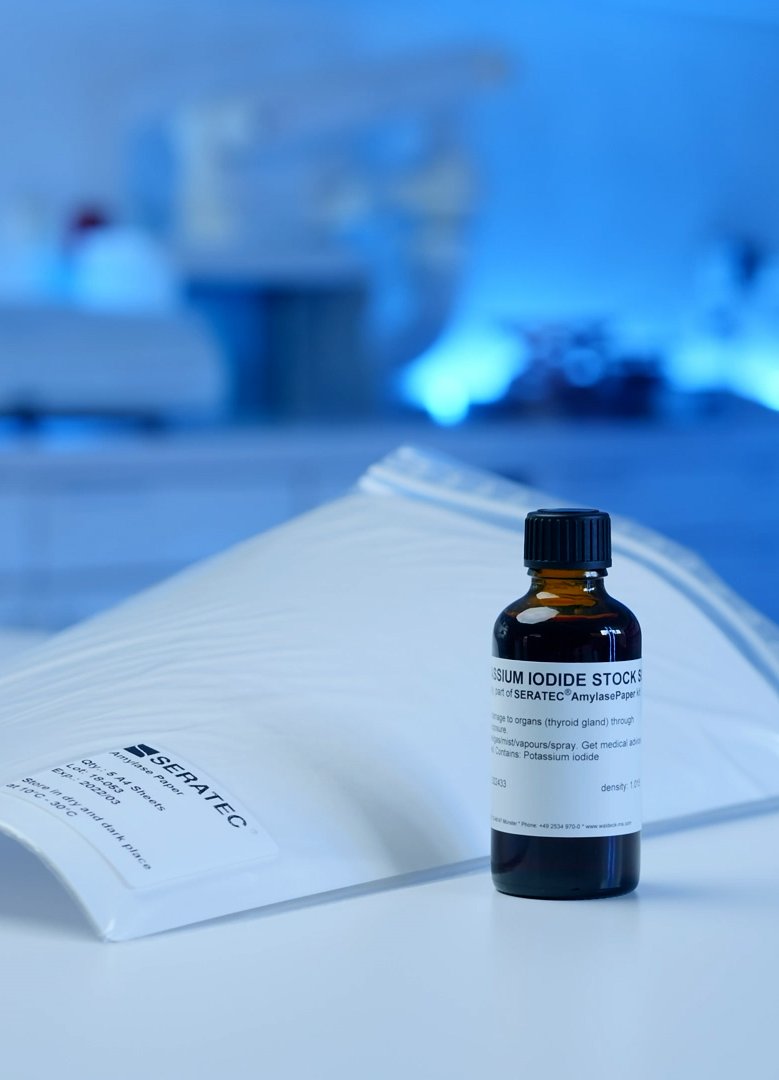
SERATEC AmylasePaper
Amylase-activity mapping sheets for locating potential saliva stains on forensic exhibits before targeted protein or DNA analysis.
Forensic science. Connected workflows.
Search by product, manufacturer, model or catalog number.
Locate a questioned trace, select the relevant protein markers and connect screening to the next forensic examination.
Explore the workflow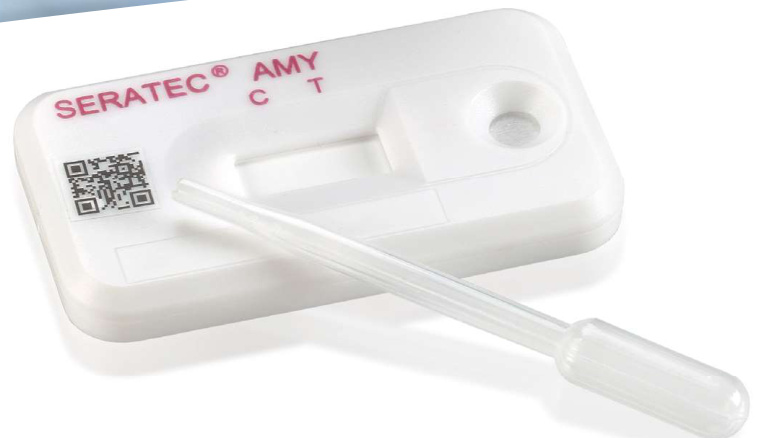
SERATEC offers distinct tools for mapping amylase activity and detecting human alpha-amylase, hemoglobin, PSA and D-dimer. Match the marker to the question: stain localisation, saliva or seminal-fluid screening, human-blood assessment, or presumptive menstrual-blood differentiation. The products support selection and contextual assessment of samples; a single marker does not establish every aspect of a trace’s origin.
Select a stage to see its role and relevant products. Open a product to review configurations, specifications and manufacturer documentation.
AmylasePaper maps enzyme activity across an exhibit; AmylaseTest adds direct antibody-based detection of human alpha-amylase. These are different analytical steps. Mapping is presumptive and is not human-specific.
Amylase-activity mapping sheets for locating potential saliva stains on forensic exhibits before targeted protein or DNA analysis.
Immunochromatographic detection of human alpha-amylase for saliva screening, with laboratory and crime-scene kit formats.
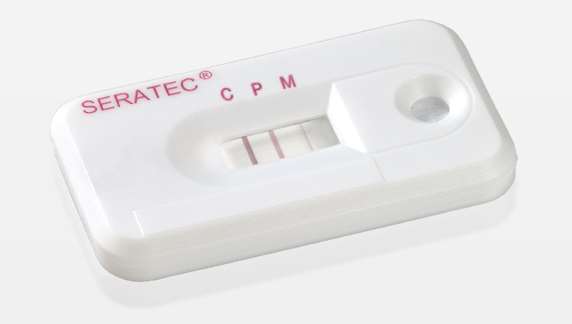
HemDirect targets human hemoglobin. PMB Test combines hemoglobin and D-dimer to support presumptive differentiation of menstrual and peripheral blood. Elevated D-dimer in other blood samples is a limitation to consider in interpretation.
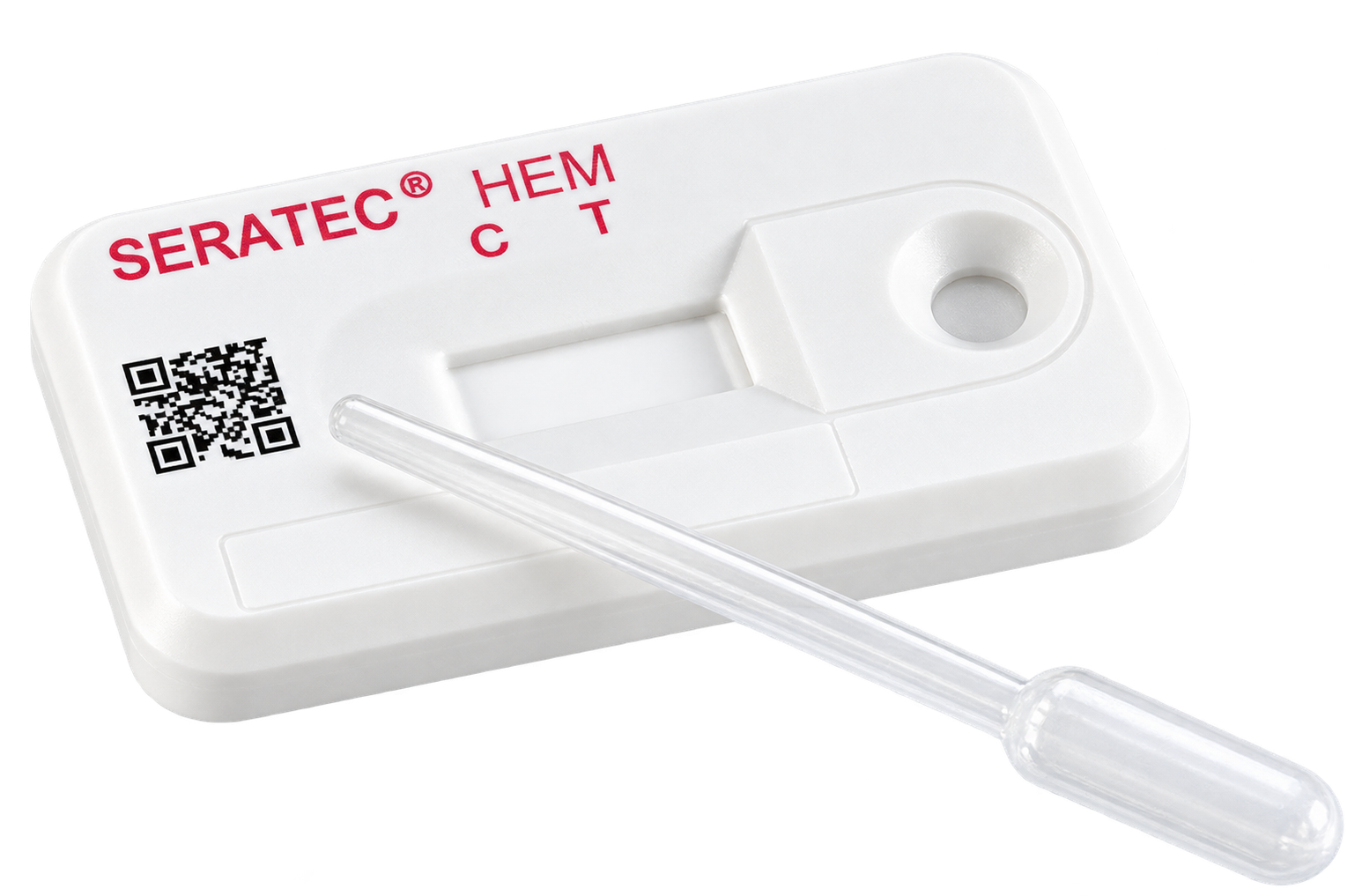
Human-hemoglobin cassette test for forensic blood traces, including aged stains, with laboratory and field configurations.
Combined human-hemoglobin and D-dimer test for the presumptive differentiation of menstrual and peripheral blood traces.
PSA Semiquant provides a PSA result with an internal comparative standard. PAM Test examines PSA and alpha-amylase together. Choose single-marker or duplex screening according to the question and available sample, then review the exact current instructions and performance notices.
PSA immunoassay for forensic seminal-fluid screening, with an internal reference line for semiquantitative interpretation.
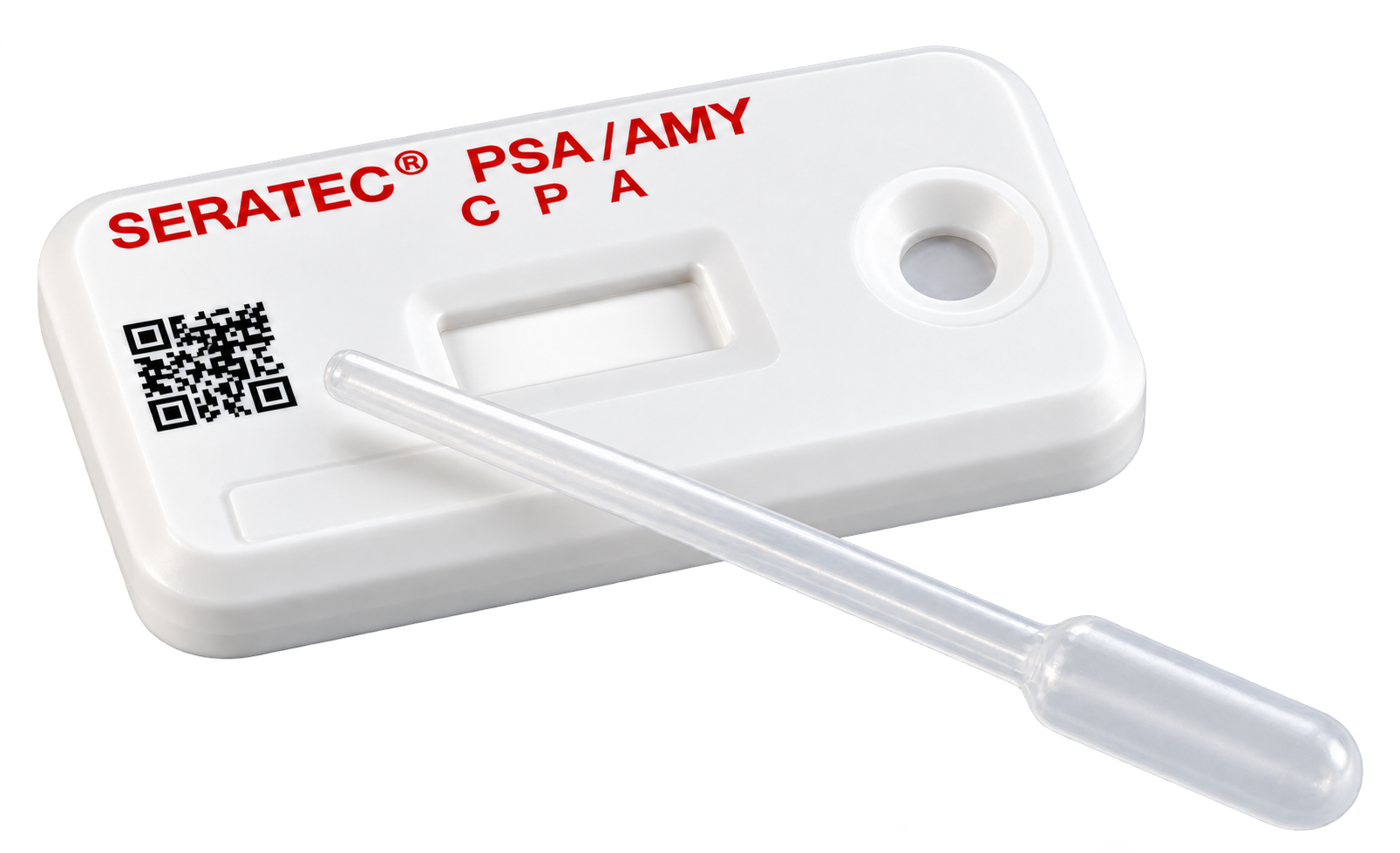
Duplex cassette for simultaneous PSA and alpha-amylase detection, combining semen and saliva screening in one test.
Amylase and PSA can occur in other body fluids. Hemoglobin assays have documented species cross-reactivity, while D-dimer is not unique to menstrual fluid. Include these limits in the laboratory’s assessment.
Compare laboratory boxes with individually equipped CS kits. Confirm cassette count, swab and buffer supply, storage conditions and the exact manufacturer instructions. Published sensitivity differences are flagged on the relevant product pages.
The manufacturer documents downstream DNA compatibility for these workflows. Plan sample allocation and follow-on analysis within validated laboratory methods, rather than treating screening as the final identification result.
SERATEC AmylasePaper
Manufacturer resource · EnglishPDFSERATEC AmylaseTest
Manufacturer resource · EnglishPDFSERATEC HemDirect
Manufacturer resource · EnglishPDFSERATEC PMB Test
Manufacturer resource · EnglishPDFSERATEC PSA Semiquant
Manufacturer resource · EnglishPDFSERATEC PAM Test
Manufacturer resource · EnglishSave the products you are considering and include your application, sample types and configuration questions in an enquiry.